PARTHENIOS of METEORA (†1807)
CANTOR – COMPOSER
ABBOT of GREAT METEORON MONASTERY
Brief History of Meteora Monasticism (12th – 19th century)
From the beginning of the 10th century, in the “Diatyposis” of Emperor Leo the Wise (886-912), we have a mention of the bishopric of Stagi as an ecclesiastical jurisdiction of Meteora, which falls under the Metropolitan of Larissa, as His Eminence and Exarch of the second Thettalia and all of Greece.
From various sources we are informed that at least since the end of the 11th century, hermit monks have been residing at the foot of the Meteora rocks, organized according to the Typicon of the skete centered around the main Church of Panagia Doupiani.
In 1266, the Thessalian state was founded by John I Doukas. In 1348, due to the civil war between the successor Andronikos III Palaiologos and the ambitious John Kantakouzenos, Thessaly was occupied by the kral (king) of Serbia, Stefan Uros IV Dusan.
In the year 1333 or 1337, the monk Athanasios (his civil name Andronikos) left Mount Athos which is plagued by pirate raids, seeking a more peaceful place. Following the suggestion of the Bishop of Serbia, and well-known hesychast, Jacob, he settles in the stone city near the Byzantine city of Stagi and specifically in the Stylos (Pillar) of Stagi. After a three-year stay in the Pillar, in 1340, together with the hieromonk Iakovos and the monk Ignatius, he occupied the so-called Platys Lithos, which he named Meteora, i.e. a rock between heaven and earth at a height of 630 meters above sea level.
There he created the coenobitic monastery of the Great Meteoron, originally dedicated to the Virgin Mary of Meteora. The ruler of the Serbian conquerors was then Simeon Uros with his co-regent John, who proudly used the surname Palaeologos, drawing his lineage from his mother Maria Palaeologina. John was tonsured a monk of the coenobitic monastery in 1372 at the age of 22, changing his name to Joasaph. Athanasius departed to the Lord in 1380/81 and was succeeded by Joasaph, following the wishes of his elder. The founder Joasaph would practice in Meteora for approximately fifty years, departing from this life in 1422/1423. Due to the royal lineage of the founder John/Joasaph, and royal patronages and privileges from the first years of its establishment, the Monastery retains the name “Holy Royal Monastery of the Great Meteora”. In 1395/96 the Ottomans occupied Thessaly and the area of Meteora.
The following five centuries of Ottoman conquest brought economic poverty to the Monasteries of Meteora, ecclesiastical and political jurisdictions changed frequently, and the abbots resorted to alms (missions to solicit donations), in order to collect donations in cash or in kind for the daily survival and maintenance of the Monasteries. In 1808, the uprising of papaThymios Vlachavas took place, which was suppressed by Ali Pasha, and sealed the Monasteries of Meteora, imprisoning their abbots as suspects.
On March 28, 1881, the Treaty of Constantinople was signed between the Kingdom of Greece and the Ottoman Empire, by which the regions of Thessaly and part of the Prefecture of Arta were ceded to the Hellenic Kingdom without bloodshed.
Educational Renaissance in Thessaly (18th century)
An emblematic figure for the spiritual renaissance and education of the Greeks of Thessaly was the Bishop of Larissa, Parthenios, a music lover and supporter of Greek letters in the early 18th century (†1720). Parthenios initially founded two schools in Thessaly, one in Tyrnavos and one in Trikala, while later the educational renaissance expanded to the wider area of Thessaly (Tsaritsaina, Zagora, Milei, Agia, Skopelos, etc.).
These schools were staffed by brilliant teachers, both of the Greek language and of the Art of Chanting, contributing greatly to the spread of Greek letters. Among the teachers are prominent representatives of the educational renaissance, who were also chanters and composers: Athanasios Iviritis, domesticos and abbot of the Monastery of Iviron, Daniel Dousikiotis, Paul the priest of Skopelos, Theodore of Tyrnavo, Anastasios Rapsaniotis (Chatzilaskaris) Protopsaltis of Larissa, David hieromonk of Skopelos, Parthenios of Meteora chanter and abbot of the Great Meteoron Monastery, Gabriel hieromonk and codex writer of the Great Meteoron Monastery, and others, according to Kon. Saitis (Anastasios Rapsaniotis Life and Work, Ms. dissertation, pp. 75-97.)
Abbot Parthenios (second half of the 18th century)
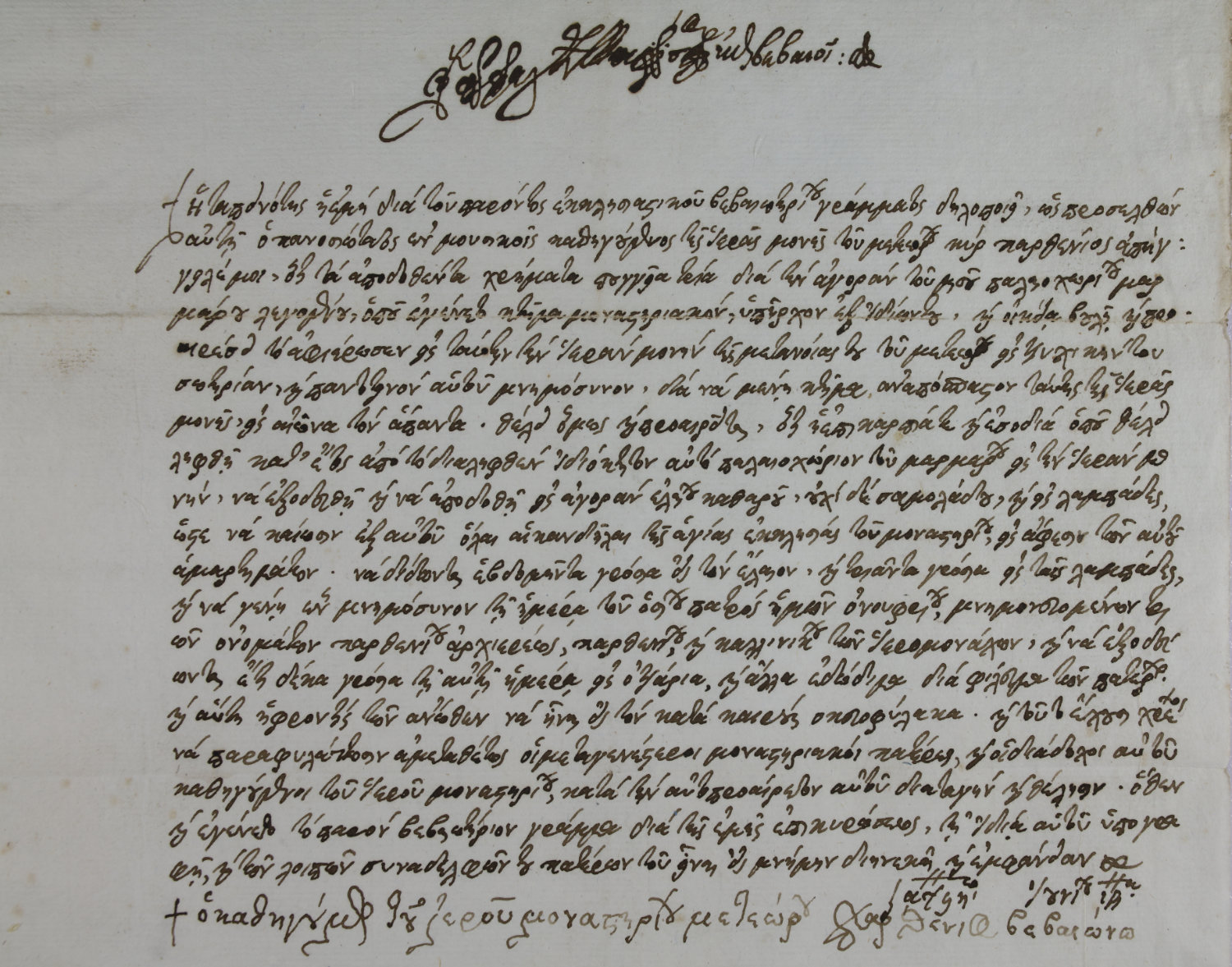
The hieromonk Parthenios becomes the twenty-fourth abbot of the Holy Royal Monastery of the Holy and Great Meteoron since its creation, according to C. Vafiadis book The Monastery of Holy and Great Meteoron, pp.491, 2019, succeeding Bessarion (Alms’ year 1775) and Damaskinos (Alms’ year 1778). He is the most important personality of the Monastery in the last quarter of the 18th century. We do not know when and if he became a novice, monk and hieromonk in the Meteoron Monastery, as no archives of the Monastery’s assembly has survived, even for his two predecessors. From his will (photo 1) we see that he requests that the name of “Parthenios the High Priest” be commemorated on the 12th of June of each year, among others.
The first indication of Parthenios’ abbotship comes from the Swedish traveler Björnståhl on April 8, 1779 (Travelogue of Thessaly 1779, pp. 81-91, translation, preface, notes, Mesevrinos, published by Rigas’ Notebooks, Thessaloniki 1979). Parthenios, as abbot, welcomes him and hosts him for seventeen days in the Monastery and on April 25, the last day of his stay, his predecessor Damascene guides the traveler to the exit of the monastery. Björnståhl describes his tour of Platylithos of the Great Meteoron, where he finds many sheeps and plantations of trees of all kinds on the rock, and notes that the monastery has 15 monks and an equal number of lay assistants, and is inaccessible to women (avaton), while at the end of his travelogue he also makes various comparisons between the two monasteries of Great Meteoron and Varlaam. Björnståhl studied various manuscript Gospels of the Monastery, helped to expand his knowledge and love of learning, both by the abbot Parthenios, and by the scholar Eustathios Nosimachos, who was visiting the monastery, a famous physician from Trikala, with was also educated in Italy. From the liturgical services of the Monastery, he describes the services of Good Friday and Pascha (Orthodox Easter). In fact, on Easter day, Björnståhl tells us that, “as is an old custom”, the abbot descends to the Episcopate of Stagi to give a sheep to the Bishop, a custom that is also followed by the other monasteries of Meteora.
In the last quarter of the 18th century, the economic situation in Meteora became unbearable and many reasons contributed to this: the reduction in the number of Meteorite monks, the ineffectiveness of the Ottoman economy within the emerging context of the Enlightenment and capitalist needs, large financial obligations to the state, the rulers and the Ecumenical Patriarchate, the Russian-Turkish War (1769-1774) in which, on the one hand, the Christians of Trikala were mercilessly slaughtered and, on the other, the region groaned from the plundering and pillaging of the Turkish-Albanians.
Parthenios, as abbot, also issued a letter of Alms, as did his two predecessors, Bessarion and Damaskinos (Table 1). In 1784, a letter of instruction was sent by the Metropolitan of Larissa, Meletios III (document no. 17, see C. Vafeiadis, The Monastery of the Holy and Great Meteoron, p. 393, 2019). Meletios signs as patriarchal administrator and guardian of the monastery and gives a tenet of conduct for the monks of Meteoron Monastery.
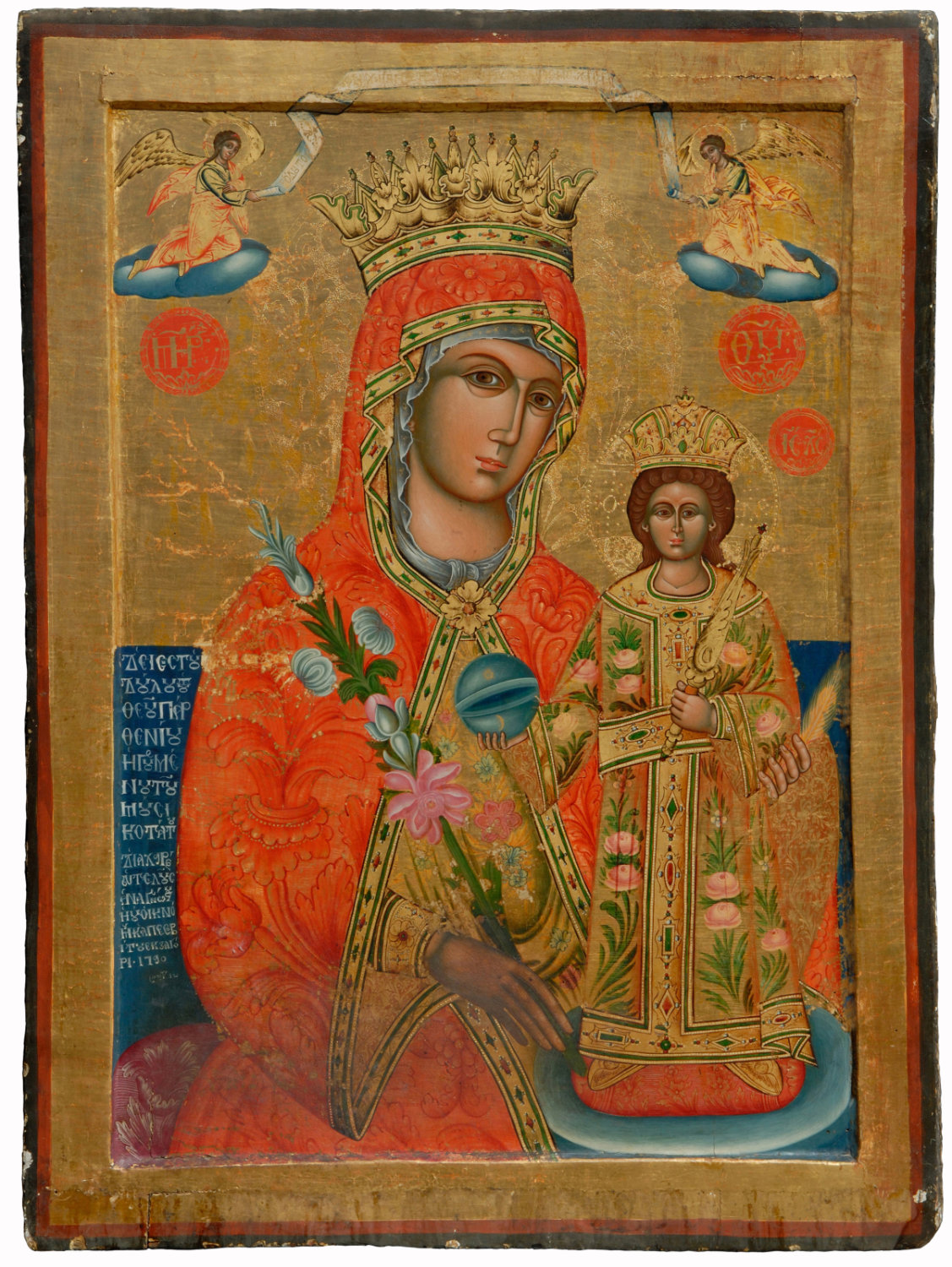
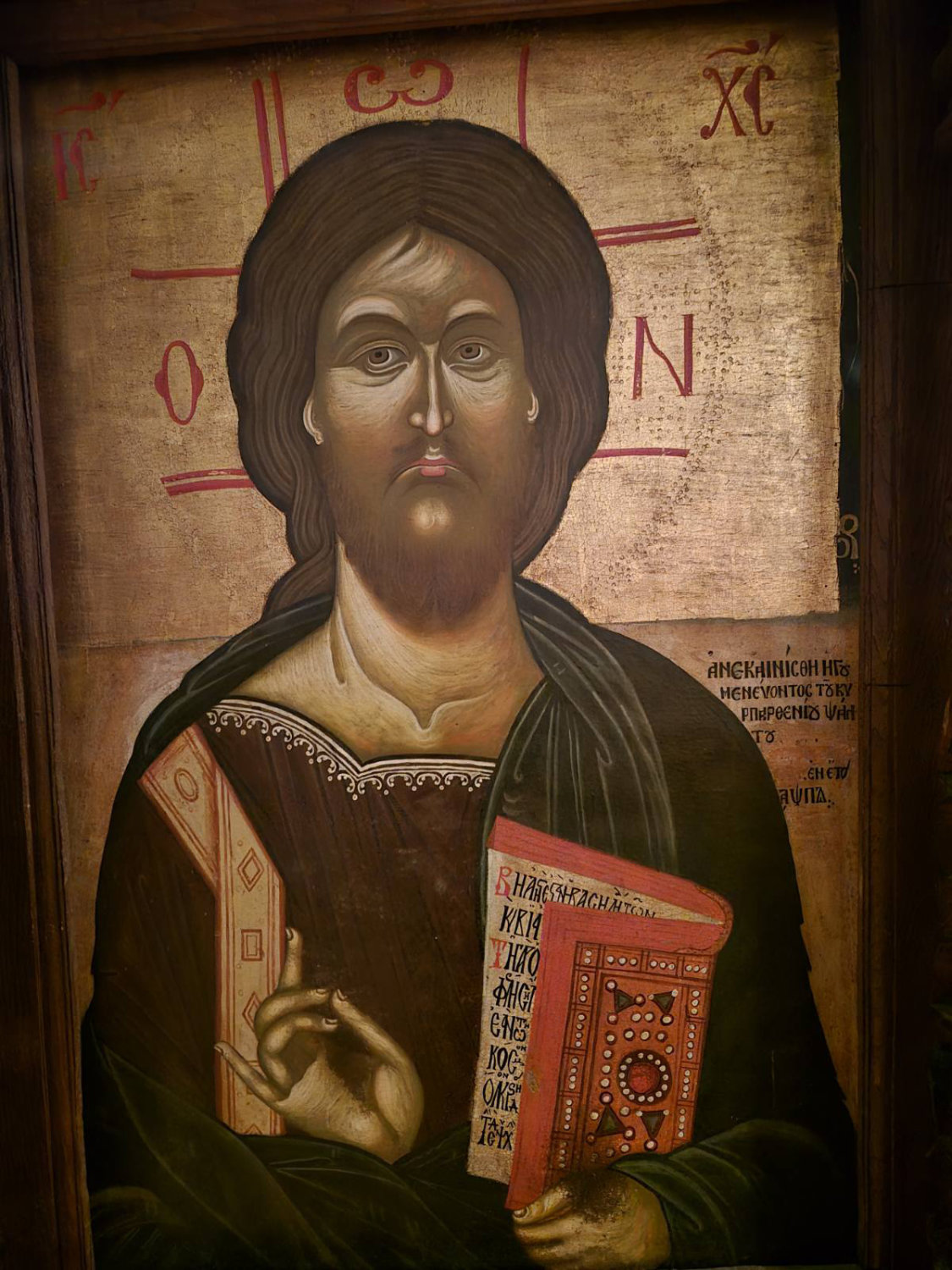
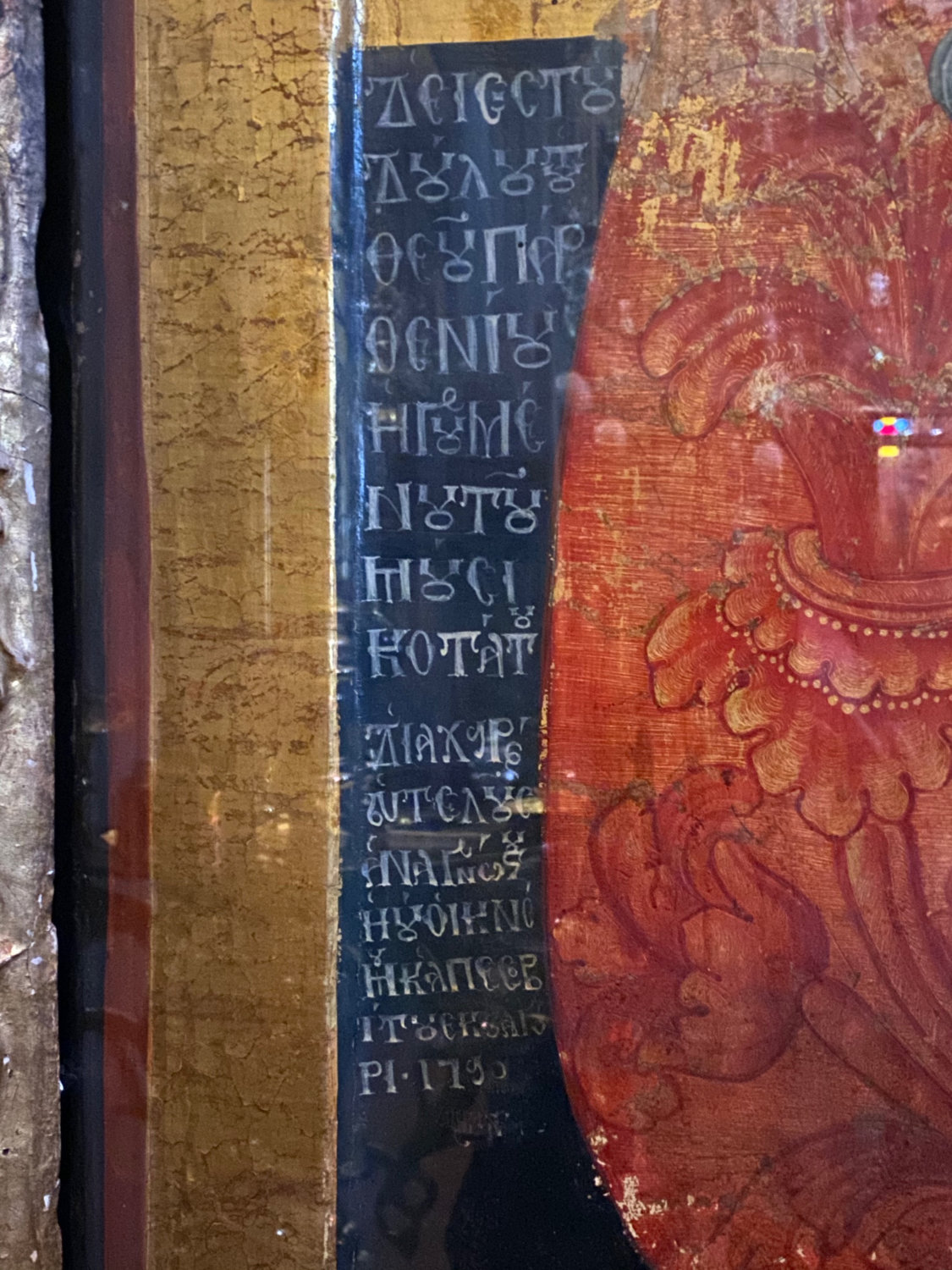
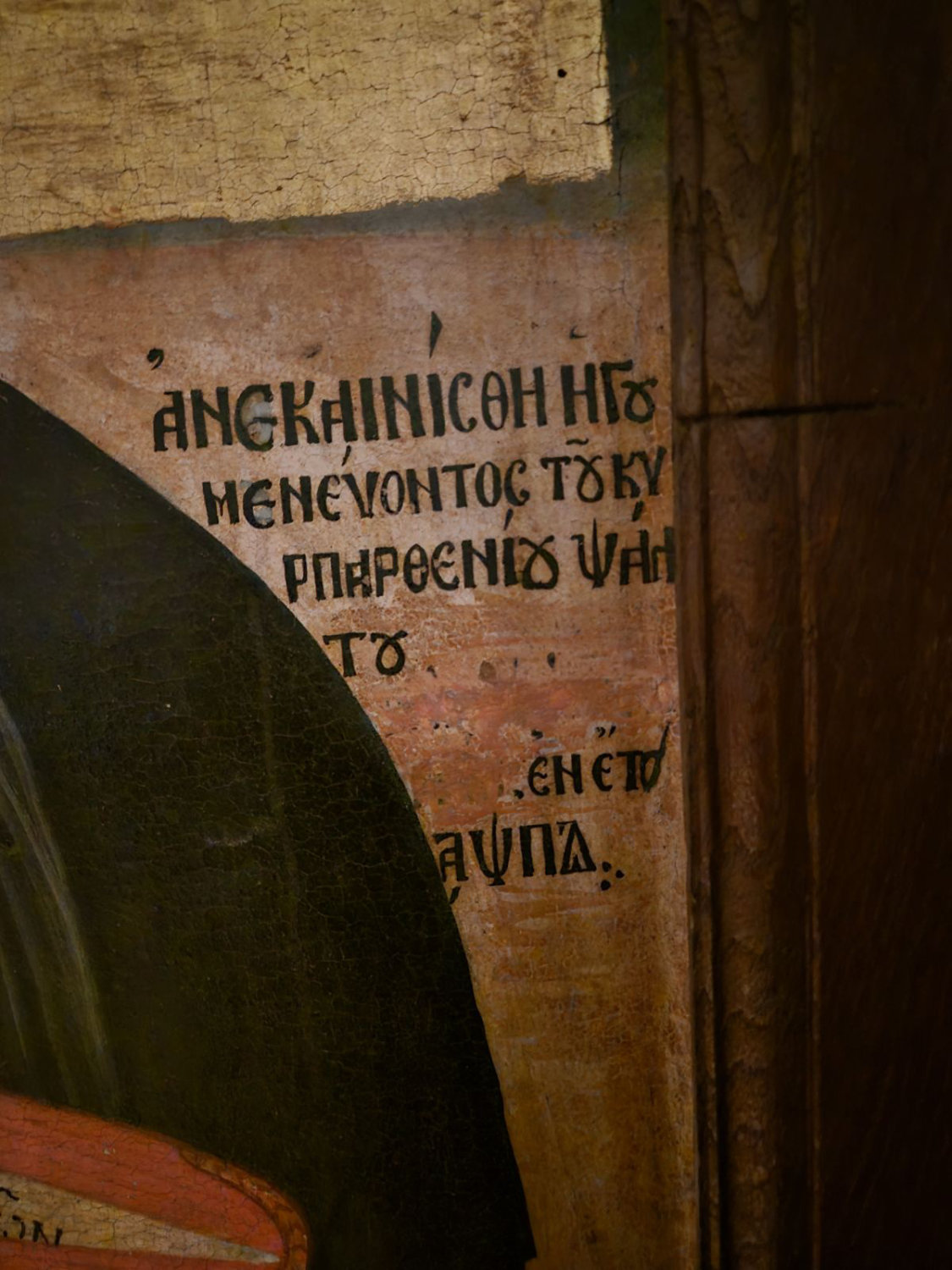
During the hegumeny of Parthenios, improvement works were carried out in the monastery. a. In 1784, the chapel of the Holy Forerunner was renovated in the right aisle of the Catholicon. On the surviving iconostasis of the chapel, and indeed on the icon of Christ, the hagiographer/renovator wrote that Parthenios was a psaltis (photo 2). b. In 1789, the chapel of St. Constantine & Helen was built at the expense of the monk Dionysios and his son, hieromonk Zacharias, from the town of Isvoro in Konitsa. c. In 1790, the icon of the Catholicon of the Monastery, Panagia “Rodon to Amaranto”, to the left of the Royal gates, was painted, and the inscription testifies: “A request of the servant of God Parthenios the abbot, the most musical, by the hand of the humble Anagnostis, son of Economos Kapesovitis from Zagori, 1790, May 12 (photo 3). d. In August of the year 1791, with the assistance of the bishop of Stagi Paisios, the icon of the Catholicon of the Monastery was decorated by Constantine Linotopitis.
In the manuscript codex 600 of the Monastery (1797 AD), with synaxaria of the Triodion and Pentecostarion, the scribe dedicates the prologue to the bishop of Stagi Paisios (1784-1808) with whose assistance the codex was completed. On the right page (recto) of the front parafolio, Paisios, in turn, states with his own hand: The present is presented to the abbot of Meteora, sir Parthenios, by the humble bishop of Stagi Paisios, dated [1798] January: 6. It seems that the two men were linked by close friendship and esteem. Six months later, on June 12, 1798, Paisios of Stagi ratified Parthenios’ will (photo 1). The text of the will is as follows from the manuscript:
+ Paisios of Stagi confirms
+ Our humility declares by this ecclesiastical letter of confirmation, as having come to ||2 this most holy abbot of the holy monastery of Meteora, he brought ||3 announced to me, that the money given in three bags for the purchase of half the old village of Mar ||4 maro called, which became a monastic estate, existing from his own will, and by his own will and ||5 discretion he dedicated it to this holy monastery of his penance of Meteora for his spiritual ||6 salvation, and his eternal memorial, so that it may remain an estate inseparable from this holy ||7 monastery, for all eternity; However, it is desired and preferred that the fruits and crops which it will ||8 receive annually from this donated private property of Marmaron to the holy monastery ||9 be spent and given to the purchase of pure oil, not linseed oil, and for candles, ||10 so that all the lamps of the holy church of the monastery may burn from it, for the forgiveness of his ||11 sins; seventy groszys are to be given for the oil, and thirty groszys for the candles, ||12 and it is to be held in his commemoration on the day of our holy father Onuphrius, commemorating the three mentioned names of Parthenios the Hieromonk, Parthenios and Κallinicos, and to send out ||14 ten groszys on the same day for fish, and other food for the hospitality of the fathers; ||15 and the above order shall be in the hands of the custodian of the sacristy (sacristan) at the time; and this is the duty ||16 that the subsequent monastic fathers, and his successors ||17 abbots of the holy monastery, should immediately review, according to his own voluntary order and will; hence ||18 and the present letter of confirmation was made by me for my ratification, to the same He signed ||19 letters, and the rest of his colleagues, his fathers, may it be in everlasting memory and glory. ᾳψϟη´ [=1798] June 12
+ the abbot of the holy monastery of Meteora Parthenios I confirm
+ Diogenes and Orestes witness
+ Cyril hieromonk and witness
The following associations are derived from Parthenios’ will: Parthenios has property in the village near the Meteora Monastery, in Paleochorio, Trikala, where he was perhaps born and raised in Trikala, a city that is mentioned by others as his place of origin. In his will, he requests that a memorial service be held for bishop Parthenios; one hypothesis for the name of the bishop Parthenios, as we mentioned at the beginning of this biography, is the music-loving bishop Parthenios (†1720) who founded schools in Tyrnavos and Trikala in the early 18th century and perhaps inspired the young student Parthenios of the school of Trikala and received his monastic name. Another hypothesis of the mentioned bishop is Parthenios, the bishop of Stagi (†1754) from Portaria village in Pelion. The Stagi Parthenios was one of the most educated bishops of the era of Parthenios of Meteora. He collaborated with the well-known codex writer Anastasios Sougdouris and wrote many codices himself. In 1751 he was elected bishop of Stagi and retained his throne until his death (March 26, 1784). Previously, he had been a monk at the Varlaam Monastery and had served as chancellor in the Metropolis of Larissa. As bishop of Stagi, on April 3, 1779, he welcomed the Swedish traveler Björnstahl to the Meteora Monastery of Saint Stephen. The number of churches built during his time in the region of Stagi is impressive. He maintained a rich library, which he bequeathed to the Monastery of Varlaam of Meteora. (Theodoros A. Nimas Education in Western Thessaly during the period of the Turkish Occupation, Contribution to the study of the Thessalian Enlightenment, Doctoral thesis, National University of Athens, p. 224, published by Kyriakides Brothers, Thessaloniki 1995. The same version is supported by Kon. Vafeiadis, in his work The Monastery of the Holy and Great Meteoron, p. 407.) Until now, we do not know why Parthenios chose to hold his memorial service every year on June 12, the feast of St. Onuphrios. A witness to the will of Parthenios is also the hieromonk Cyril, who may (?) have been the next abbot after the sealing of the Meteora Monasteries by Ali Pasha in 1808.
Finally, a year before his death, in 1806, Parthenios, having secured either donations or from his own expenses, rebuilt a new wing of cells. A stone plaque built into this wing assures us: † BY THE EXPENSES OF THE ABBOT PARTHENIOS AND/ LABOUR ON THE FOUND BROTHERS DECEMBER 8: YEAR [1806]
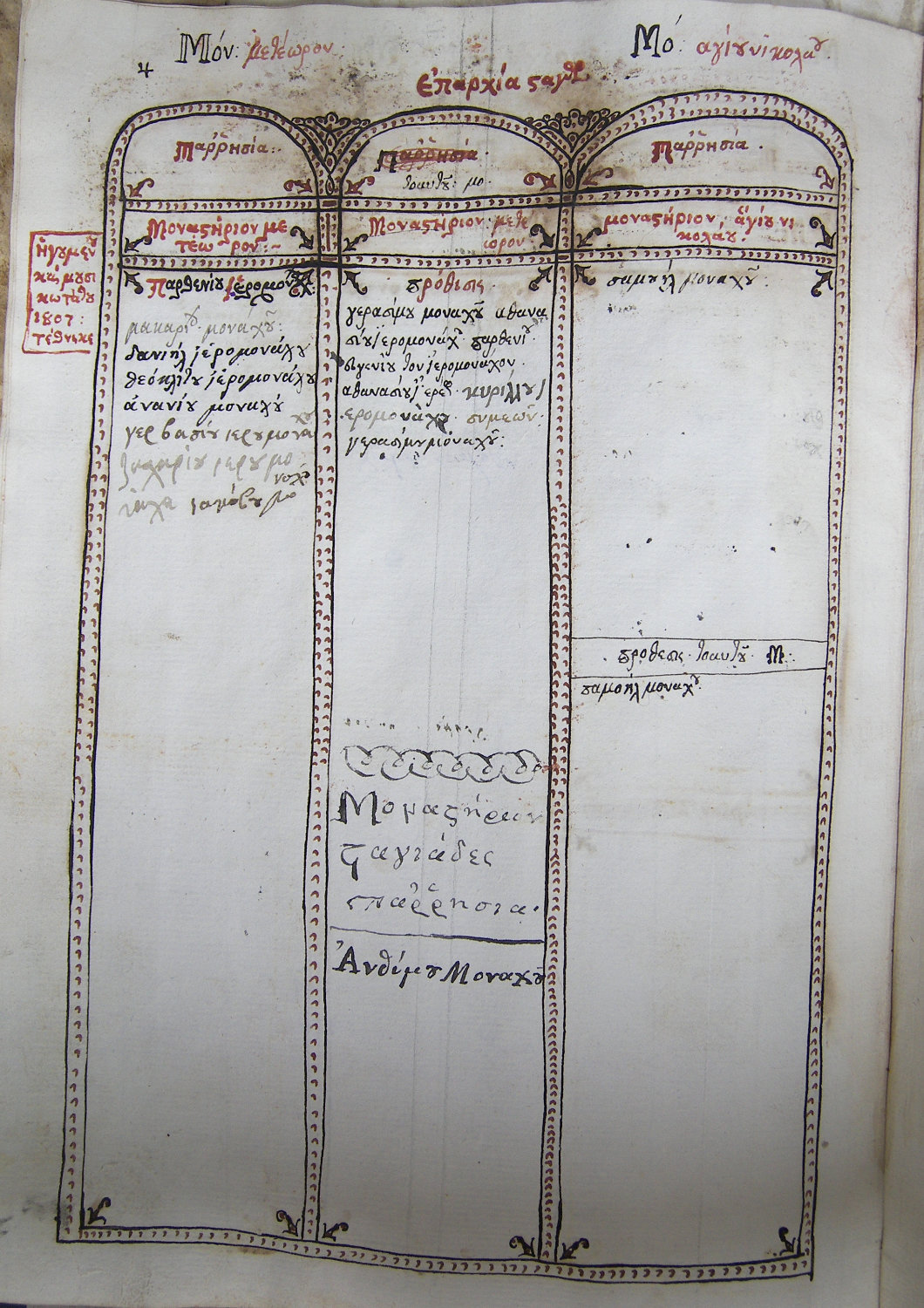
Parthenios departed from this life in the year 1807, as testified by the Παῤῥησία (= document with the founders and donors of the monasteries) page 4 in the codex of the Holy Trinity of Meteora #2: in the first left column the founders of the Great Meteora are listed. The scribe Anthimos the monk adds in the left margin of the first column “abbot and most musical 1807: died” (photo 4). (see related Ach. Chaldaiakis in Byz. Musicology 4 work of “The Polyeleos of the Parthenios hieromonk of Meteora p.53 footnote 17). The abbot of the Monastery of Arch. Nephon entrusted us in July 2025 with the page 4 of the Παῤῥησία of the Holy Trinity no. 2 which we quote here).
Previous historians were misled by a misinterpretation of a “memorial” by papaChrysanthos of Trikala (codex Varlaam 106) which states: “1809… the captain of the pasial army captured papaThymios Plachavas and sent him to Ioannina to the vizier and made him a four pieces… and when the war ended, the vizier sent and sealed the monasteries and also took the abbots who had remained in Ioannina to this day.” (see, in relation to Kon. Vafiadis, The Monastery of the Holy and Great Meteoron, p. 147 and note 322). This mention led many researchers and biographers to believe that Parthenios was among the imprisoned abbots of Meteora after the unfortunate uprising of papaThymios Vlachavas in Kalambaka in March 1808. By carefully reading the “letter of restoration and exhortation” of the assembly of the Monastery of Meteora in the year 1817 under the abbotship of Cyril, ten years after the death of Parthenios, we ascertain the existence of three predecessors, Ambrose, Gregory and Arsenios, who apparently served as abbots during the period when Ali Pasha of Ioannina “sealed” the Meteora Monasteries. (see C. Vafeiades, The Monastery of the Holy and Great Meteora, p. 420).
The venerable Parthenios, chanter and composer (2nd half of 18th century)
Parthenios of Meteora is found in the manuscript psaltic tradition of the 18th and 19th centuries, while, in the same period, five other homonymous composers and codex writers are identified. [Parthenios Mileos (Koutloumousiou 418), Parthenios Byzantios of Karakallou (Dochiariou 399), Chian hieromonk Parthenios (Koutloumousiou 447), Parthenios Georgiades of Lesvos, Parthenios hierodeacon (EBE 972) see. ref. Ach. Chaldaiakis in Byz. Musicology 4 work of “The Polyeleos of the Parthenios hieromonk of Meteora p.54 footnote 21]
Parthenios of Meteora, according to various iconographic testimonies in the Monastery, is called a musician and a chanter. In the manuscript psaltic codices of the 18th century, he is called as of Meteora and/or abbot of the Meteora monastery. In the Vatopedi codex 1451 f. 346v, the scribe also calls him as student of Anastasios Rapsaniotis, placing his composition Angelus Primus Statii after the one of Anastasios. Comparing the compositions of Rapsaniotis and Parthenios, we see a relationship of teacher to his student, regarding the musical genre and the musical motifs. Rapsaniotis is richer in the number of compositions. Another student of Rapsaniotis appears anonymously and is the author of the Koutloumousiou codex 558, who is also identified in the second half of the 18th century. The first indication of Rapsaniotis’ musical compositions comes from an autograph of the priest Michael of Chios dated 1744. (see C. Saitis, Anastasios Rapsaniotis Life and Work, Ms. Dissertation p. 100) So, Parthenios must have studied with Rapsaniotis and composed his music while being relatively close in age to him.
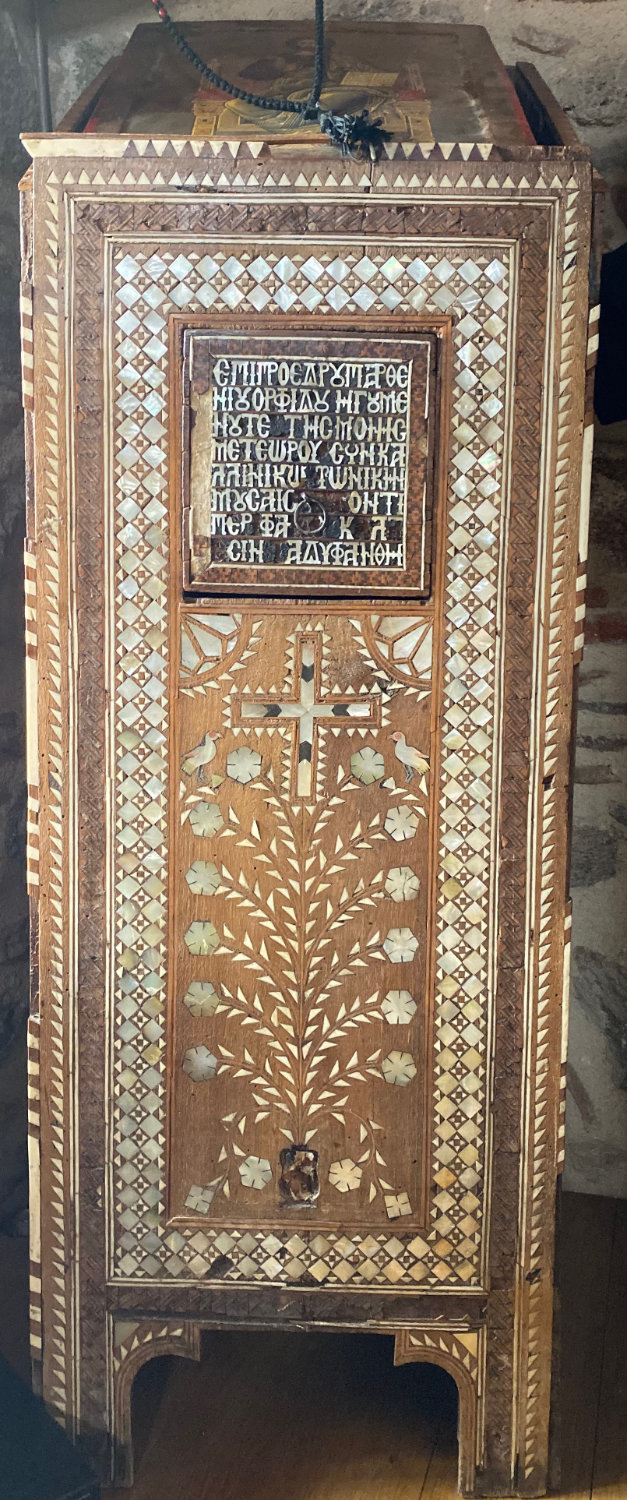
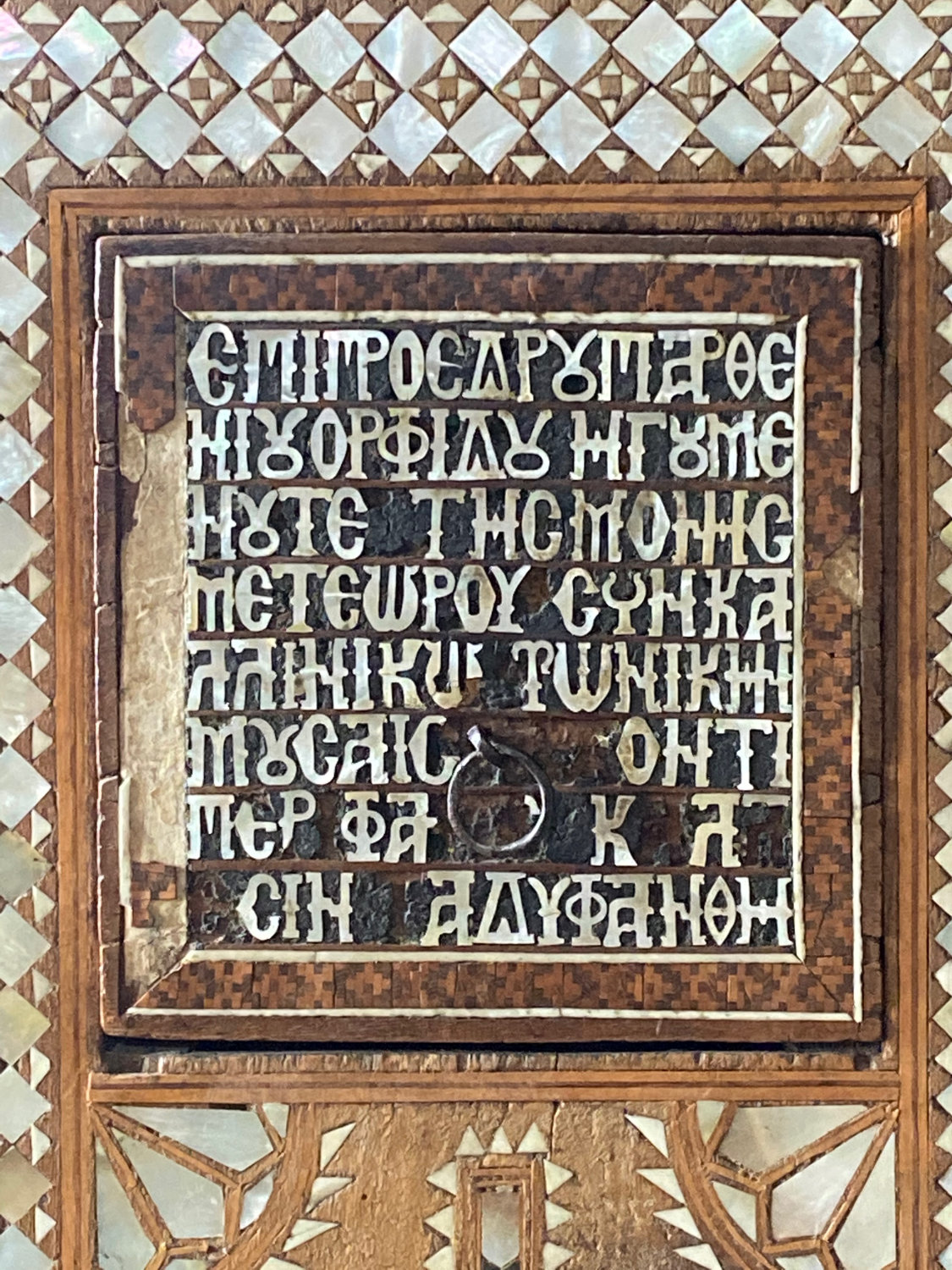
Parthenios bequeaths us 64 of his compositions (Complete Works), which are treasured in the two codices of the monastery of Great Meteoron 329 and 340. A few of his compositions, mainly Polyeleos, are also spread in other codices, e.g. EBE 2428, EBE 926, Xenophontos 137, Vatopediou 1301 and 1451. Parthenios is identified by scribes as the abbot of Meteoron and a very musical person in almost all the psaltic codices. There is no mention anywhere of his nickname Orfidis, which is an internal name of the Meteoron monastery either as a diminutive or as a corruption of his last name. On a wooden altar decorated with mother-of-pearl and ivory, which is today in the monastery’s Dinning room, the craftsman (photo 5 and insert) writes in capital letters: ON THE DAYS OF PRESIDENT PARTHENIOS ORPHIDIS, ABBOT OF THE MONASTERY OF METEORA WITH KALLINICOS THAT GAVE TO MUSIC VICTORY THIS WAS WEAVED WITH PROUD AND BEAUTY”. Reading the inscription carefully, we observe the following: The craftsman calls Parthenios in addition to Abbot and President. Are these two synonymous words or did he also have some other attribute, from the time he was in Trikala? Furthermore, he does not dedicate the elegant shrine only to Parthenios, but also praises in large of the hieromonk Kallinikos and protopsaltis as follows: “to the one who gave music victory.” We meet the hieromonk Kallinikos, ten years after the repose of Parthenios (1817), signing as the protopsaltis of the Monastery at an assembly minutes of the Monastery. (see, in relation to Kon. Vafiadis, The Monastery of the Holy and Great Meteoron, p. 420). Here, then, we have the most musical Parthenios, burdened by the many concerns of his abbotship of the Monastery, who daily listens to his Chief Cantor, the hieromonk Kallinikos, chant his melodies!
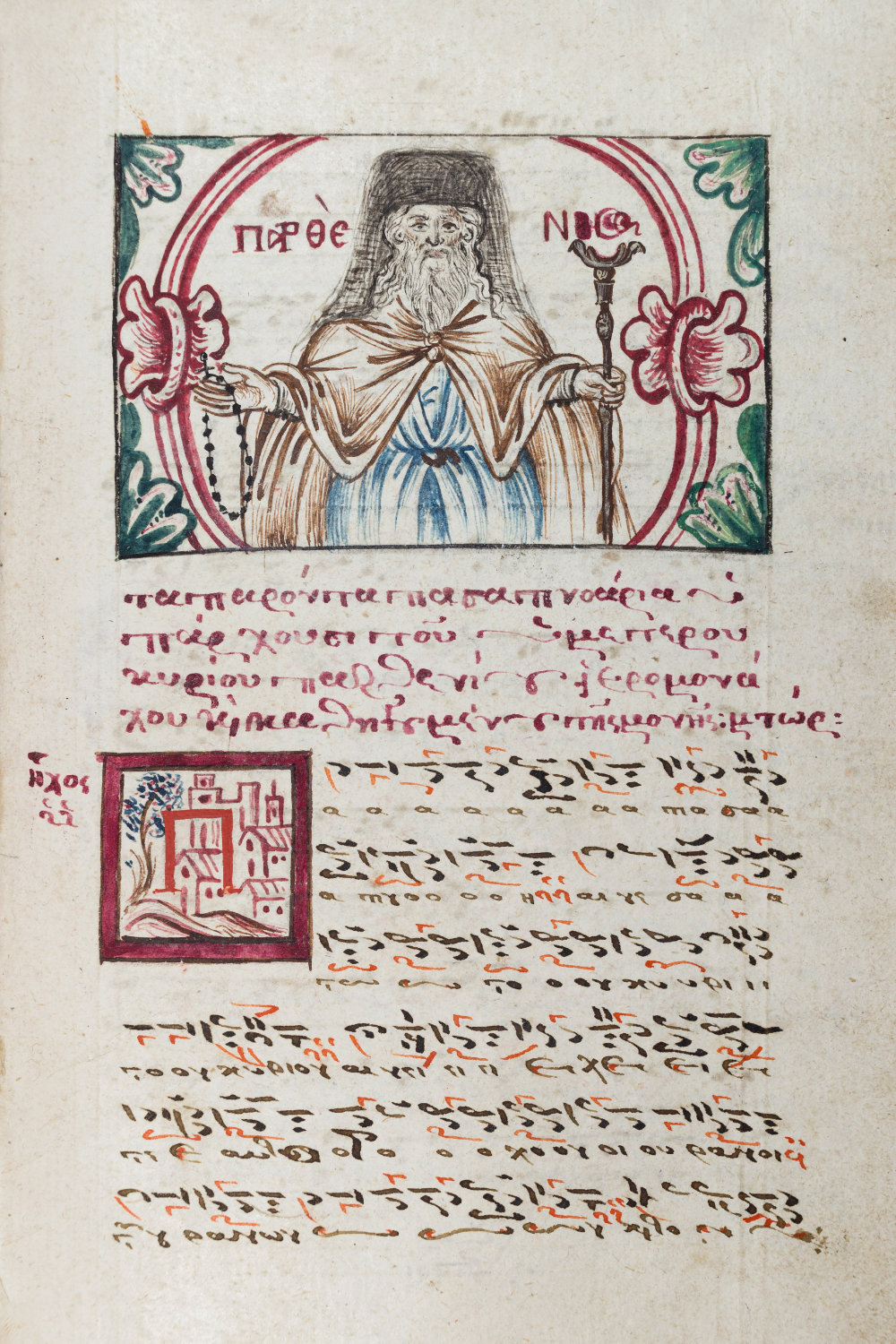
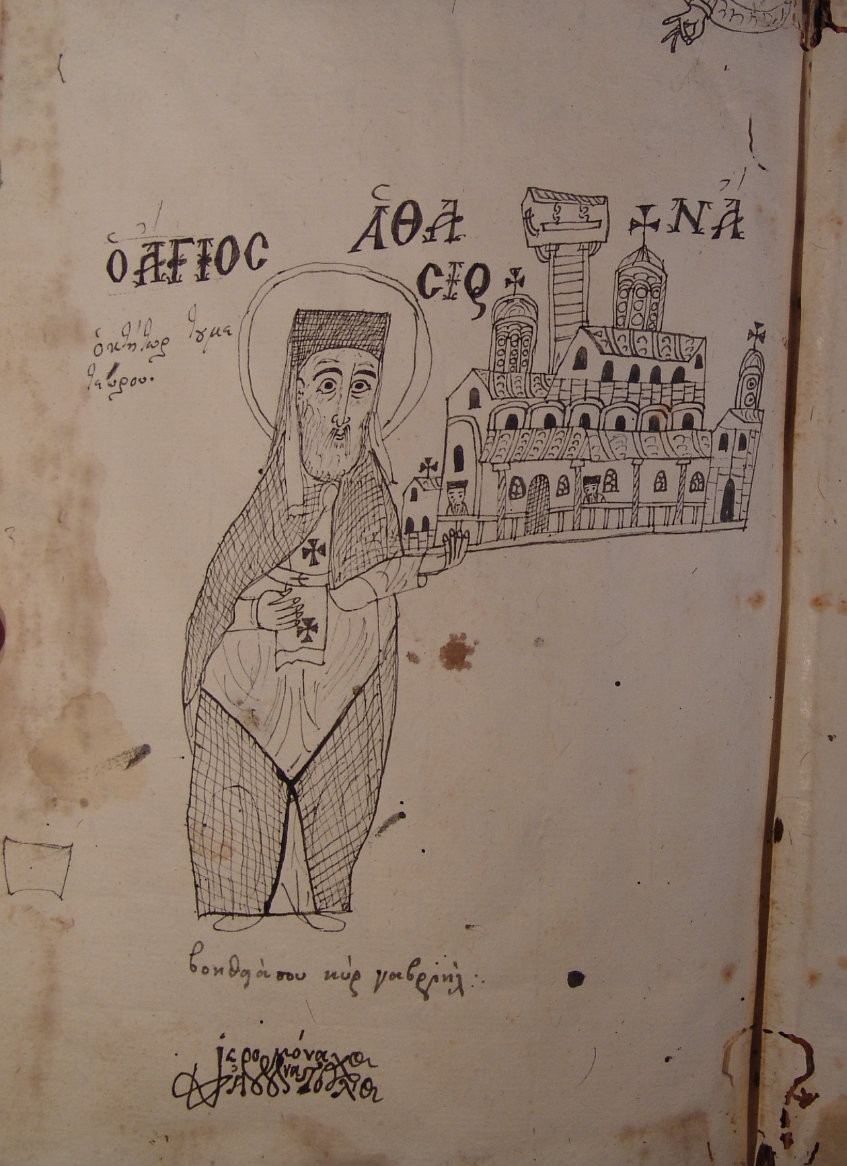
We have well-founded suspicions that Kallinikos, since he interprets Parthenios’ compositions, may also be the unknown scribe who recorded on folios 101r to 146r the Complete Psaltic Works of Abbot Parthenios in the codex Met329. It would be unlikely that Abbot Parthenios himself, if he were the scribe of codex 329, would have painted his face with a shepherd’s staff on folio 116r. (Gr. Stathis has been certain since 1990 that Parthenios of Meteora is the scribe of codex 329. Ach. Chaldaiakis, in his work “The Polyeleos of Parthenios the Hieromonk of Meteora” p. 121, writes: (provided, of course, that the codex is an autograph of the most musical abbot in question…) These folios, together with the folios 1-100 and 147-161, were bound in May 1790 and constitute the codex 329. We also note that during the abbotship of Parthenios (1779-†1807), the hieromonk and scribe Gabriel also lived in the monastery, an autograph of whom is preserved in the National Library of Greece, manuscript EBE 891 of the year 1787, while on the back cover of this manuscript a painting of the Meteora Monastery with the founder St. Athanasios was preserved (photo X). Comparing the handwriting of Gabriel in the manuscript EBE 891, we conclude that he is not the scribe of Transfiguration 329 codex. Despite this, the manuscript 329 states on a folio attached to the inside of the back page: the present book of pap(a) kyr Gabriel was bound; by pap(a) Anastasis; May 20-1790. Our question is reasonable: how did the hieromonk Gabriel have the manuscript of Transfiguration 329 in his cell? Or is it another scribe with the same name? Furthermore, we observe that the scribe of codex 329 is quite illiterate in terms of the Greek language and, in fact, that the same word has two spellings: ἰγούμενος (f121a, f136a) – ἡγούμενος (f114a) – ἠγουμένου (f123a) and this may lead us to dubious conclusions regarding the origin of the scribe, whether from the monastery of Great Meteoron or outside the monastery. We read on folio 116r: the present pasapnoaria exist of your sir Parthenios hieromonk & abbot of the monastery of M(e)t(e)or(a): If the adjective your is correctly written, then it leads us to the conclusion that the scribe does not belong to the monastery of Great Meteoron. If your word should have been written as ours in Greek then it leads us to the conclusion that the scribe belongs to the monastery of Great Meteoron.
The Complete Psaltic Works of Parthenios and their dissemination
Parthenios the composer bequeathed to us sixty-four (64) compositions, also known as ΑΠΑΝΤΑ in Greek, which are written in the old psaltic notation of his era in the Transfiguration codices 329 and 340 (see contents). The introduction of the New Analytical Method by the Three Masters [Metropolitan Chrysanthos, Gregory the Protopsaltis (†1821) and Chourmouzios the Archvist (†1840)] in 1814, so as to replace the Old Scrip, gave great impetus to the creation of new compositions and the development of modern Byzantine and contemporary Psaltic Art. Furthermore, the rapid spread of the New Method was facilitated by the typographical typesetting of the New Method characters. The first New Method hymnal books were printed in Bucharest (1820), then in Constantinople (1824), and hymnal editions continued unabated throughout the 19th century, while at the same time anew compositions appeared in the New Method. At the same time, the scribes and the New Method psaltic manuscripts gradually disappeared, as did everything related to ancient byzantine chant and its sound. The inventor of the New Method, Courmouzios the Archvist, also bequeathed to us 36 of his manuscripts in the New Method, which are housed in the psaltic archive of the ΜPΤ (Metohion of the Holy Sepulchre), but these too remain unpublished to this day. As a result, in a short period of time, knowledge of the Old Script waned, resulting in the forgetting of many excellent examples of eight and more centuries of psaltic (Byzantine and post-Byzantine) music-making and tradition. The same fate followed the compositions of Parthenios of Meteora, which to a large extent also reveal the rich liturgical tradition of the Holy Meteora.
Parthenios’ Polyeleos, Servants of the Lord Mode 2, only the twenty-one (21) verses of Psalm 134 (in the Septuagint) were transformed and shortened in the New Method by the music teacher Ioasaf, hieromonk in Dionysiou Monastery in Mt. Athos in the 19th century and were widely distributed on Mount Athos. It was adapted respectively to the Slavonic language by Ioasaf of Rila and to Romanian by Nektarios Vlachos (†1889). It should be emphasized that Joasaph of Dionysiou, t r a n s f o r m e d the original composition of Parthenios, did not transcribe verbatim from the old script into the New Method as well as the Glorifications of Polyeleos. In 1990, Professor Gr. Stathis transcribed few compositions of Parthenios, including the verses of Polyeleos. All of the above transcriptions have not always been completely faithful to the original melody.
At the initiative of the Abbot of the Meteora Monastery, Archmandrite Nephon, in 2015, Ioannis Arvanitis explained and transcribed in the New Method the Complete Works Parthenios, following the encouragement of his already student in byzantine palaeography Y. Bilalis. The teacher Arvanitis, after many years of thorough research into musical manuscripts, somehow recovered the lost “Key” of the Old Script of the byzantine psaltic manuscripts.
Arvanitis transcribes into the New Method the 64 forgotten works of Parthenios, accurately continuing the work and method of transcription of the Three Masters 200 years after the death of Parthenios and the reform of 1814. In 2018-20, the Romeiko Ensemble, under the vocal guidance, teaching and direction of Yorgos Bilalis, performs and records the “uplifting” melodies of Parthenios in eight hours of audio material.
Parthenios leaves us many short and long melodies for all the services of the Church. Among his many compositions, the following stand out: Theotokion of the Liturgy of St. Basil Mode pl. 4, Polyeleos Servants of the Lord Mode 2, Kontakion of the Akathist Hymn To the victorious leader Mode 1, First Strophe of the Akathist Hymn Angelus Primus Statii Mode 4, Pasapnoaria of the Matinal Gospel in eight Modes, Kalophonic Heirmos All my life, Mode 3.
Yorgos Bilalis
Protopsaltis and Researcher
TABLE 1 MISSIONS to SOLICIT DONATIONS